Keygen Postal !link! Now
by Miniclip.com
Hi, here you can download APK file "Mini Militia" for free, apk file version is 4.2.8 to download to your android just click this button. It's easy and warranty. We provide only original apk files








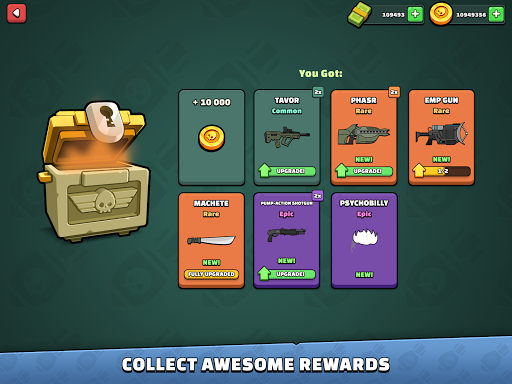





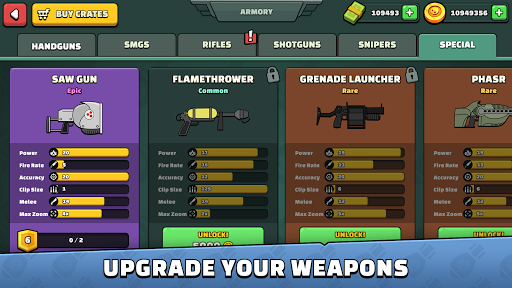
















Mini Militia - Doodle Army 2 is all about intense multiplayer combat!
Battle with up to 6 players online in this 2D fun cartoon themed cross between Soldat and Halo, inspired on the original stickman shooter Doodle Army.
Key features:
.Online multiplayer with up to 6 players
.Intuitive dual stick shooting controls with jetpack flight
.Over 20 maps to explore
.Wide range of modern and futuristic weapon types
.Offline Survival mode
This game includes optional in-game purchases (includes random items).



tag was a now-deprecated HTML element used for generating key pairs in forms. Università di Bologna 10 sites Keygen - Wikipedia Keygens, available through P2P networks or otherwise, can contain malicious payloads. These key generators may or may not generate... Wikipedia keygen-post/post.md at master - GitHub This is a data structure, containing digests of mail addresses of known registered users. This is a pretty big file embedded in th... GitHub HTML keygen Tag The tag specifies a key-pair generator field used for forms. When the form is submitted, the private key is stored locally, and th... Università di Bologna Show all Security: It would generate a private key stored locally and a public key sent to the server for certificate enrollment. Deprecation: Most modern browsers dropped support for it by 2015-2017 due to its proprietary nature and limited use outside of enterprise environments. W3C +1 4. Risks and Malware Keygens found on P2P networks are frequently flagged as
, or a niche piece of digital art/merchandise referencing software cracking culture. 1. Video Game Context ( ) Historically, "keygen postal" searches are linked to players attempting to bypass the DRM (Digital Rights Management) of . Purpose : These tools are designed to generate serial numbers or product keys to activate the game. Risks : Cybersecurity firms like Huntress and ReasonLabs warn that these files often contain malware, such as the Win32/Keygen hacktool, which can steal data or open backdoors on your system. 2. Digital Art & Merchandise There is a specific aesthetic movement that treats "keygens" as a form of retro-tech art, often featuring chiptune music and low-poly graphics. Artistic Representation : You can find "postal" (postcards or prints) featuring "keygen" designs, such as the ABLETON R2R KEYGEN print on Redbubble, which celebrates the visual style of software cracking groups like R2R. 3. Gaming Easter Eggs (Deltarune) In the game , "KeyGen" is an actual in-game item. Function : It is a key item purchased from the character Spamton in Chapter 2. Significance : Buying it triggers a specific music track and allows players to access the basement of the Queen's Mansion to fight a hidden boss. Postal for Sale con la obra «ABLETON R2R KEYGEN
The screen glowed a soft, phosphorescent green in the dim light of the basement. Leo rubbed his eyes, the clock on the wall reading 3:47 AM. Around him, the quiet hum of three desktop PCs and a server filled the air like a digital lullaby. On the central monitor, a small, boxy window pulsed with a crude, lo-fi beat. It was the keygen. Not just any keygen. This one was for “Postal 2: Apocalypse Weekend,” a cracked copy he’d downloaded from an underground forum. But this keygen was a work of art. Its interface was pixel-art cyberpunk: a flickering circuit board background, a green monospace font that cascaded like the Matrix, and a chiptune melody that sounded like a distressed Commodore 64 arguing with a Game Boy. The title at the top read: “POSTAL // GENESIS // TEAM DARKMETRIC” Leo had always loved the ritual. Before streaming, before denuvo, before the endless subscription models, there was the keygen. It was the anti-capitalist’s overture. You didn’t just get a game; you earned it. You had to find the crack, dodge the fake “serial.exe” files that were actually trojans, and finally, when you ran the real keygen, you were rewarded with a digital incantation. He pressed the GENERATE button. The music swelled into a frantic, bit-crushed arpeggio. A string of letters and numbers materialized: POST2P-7X4JN-2LM9Q-6RTVY. But something was different tonight. As he copied the key into the game’s installer, the keygen window didn’t close. Instead, the music stuttered, reversed, and then became something else. A voice. Garbled, low, like a shortwave radio broadcast from a sinking ship. “Hello, Leo.” He froze. The mouse felt cold in his hand. “Don’t Alt+F4. That would be rude. You’ve been generating keys for six years. We know.” He looked at the folder name. Team Darkmetric. He’d assumed it was just a cool alias. A fantasy. “You think ‘Postal’ is just a game about a guy in a trench coat losing his mind?” the voice crackled. “It’s a manual. Every mailbox you set on fire. Every shovel you use to decapitate a cop. It’s a stress test for the soul. We’ve been watching to see who passes.” Leo wanted to laugh it off. A weird virus, maybe a prank from a forum troll. But the cursor was moving on its own now, sliding across the screen. It opened his file explorer. Then his documents. Then a deeply buried folder named “receipts.” His breath caught. That folder contained everything. The scan of his passport he’d sent to a crypto exchange. The photos of his neighbor’s house he’d taken for an insurance claim. A list of passwords he’d saved in a plaintext file called “dont_forget.txt.” The keygen window expanded. The pixel art melted, revealing a live feed. A grainy, fisheye-lens view of his own basement. He saw himself—pale, wide-eyed, his reflection caught in the dark glass of the monitor. “You’re not generating keys, Leo. You’re generating entries. Every time you ran one of our keygens, you sent us a small package. Your IP. Your local network map. The name of your Wi-Fi SSID. The make of your router. And tonight, we decided to send a package back.” He heard a sound. Not from the speakers. From upstairs. A soft, deliberate thump. Like a heavy boot stepping onto his porch. “The game was never ‘Postal,’” the voice whispered, now eerily calm. “The game was you. And the final key… is your front door.” The screen went black. The chiptune faded into a single, resonant hum. Leo sat in the sudden, deafening silence. The clock on the wall flickered to 3:48 AM. Then he heard it: the slow, deliberate creak of the basement stairs. Not from the game. From behind him. He didn’t turn around. He just stared at the dead monitor, reading the last thing the keygen had printed before it vanished—a line of text burned into the phosphor ghost of the CRT: “Keygen Postal. Delivered. Do not shut down.”
Key Generation in the Postal Domain: Securing the World’s Oldest Communication Network keygen postal
Introduction For centuries the postal system has been the backbone of personal, commercial, and governmental communication. From the ancient imperial couriers of Persia to today’s global logistics giants, the promise of “mail delivered” has shaped societies, economies, and politics. Yet, in the digital age, the traditional notion of “mail” no longer refers solely to paper letters and parcels; it also encompasses electronic data, identity verification, and secure transaction processing. At the heart of this transformation lies cryptographic key generation —the process of creating the secret numbers (keys) that enable encryption, digital signatures, and authentication. In the context of postal services, key generation (often colloquially called a “keygen”) is the foundation for a suite of security mechanisms that protect everything from confidential correspondence and financial transfers to the integrity of package tracking data. This essay explores the role of key generation within modern postal operations, the technical and operational challenges it presents, the standards and best‑practice frameworks that guide its implementation, and the emerging trends that will shape the future of a “digital‑first” postal ecosystem.
1. Why Cryptographic Keys Matter to Postal Services | Postal Function | Security Goal | Cryptographic Mechanism | |-----------------|---------------|--------------------------| | Secure Mail (e‑mail, e‑letter) | Confidentiality of content | End‑to‑end encryption (AES, RSA, ECC) | | Electronic Certified Mail (e‑CM) | Legal non‑repudiation | Digital signatures (RSA‑PSS, ECDSA) | | Package Tracking & Logistics | Data integrity, authenticity of status updates | HMACs, MAC‑based signatures | | Identity Verification (e‑ID, delivery proof) | Strong authentication of sender/receiver | Public‑key certificates, TPM‑based keys | | Financial Services (postal banking, money‑order processing) | Transaction confidentiality & integrity | TLS, payment‑specific tokenization | In each case, the strength and uniqueness of the underlying keys determine how resistant the system is to eavesdropping, tampering, and fraud. A weak or predictable key can compromise an entire service line, exposing the postal operator to regulatory penalties, financial loss, and reputational damage.
2. Fundamentals of Cryptographic Key Generation tag was a now-deprecated HTML element used for
Entropy Sources – True randomness is required. Postal systems often harvest entropy from hardware (e.g., TPM/TRNG modules, sensor noise, timing variations) and from environmental sources (e.g., network traffic, user interactions). Key Length & Algorithm Choice – Modern standards (NIST SP 800‑57) recommend at least 256‑bit symmetric keys (AES‑256) and 3072‑bit RSA or 384‑bit ECC keys for asymmetric operations. Key Lifecycle Management – Generation is only the first step. Secure storage (HSMs), rotation policies, revocation mechanisms, and destruction procedures must be defined. Compliance & Certification – Postal operators, especially those offering financial services, must align with regulations such as EU‑eIDAS, ISO/IEC 27001, and national postal security mandates.
3. Architectural Approaches in the Postal Context 3.1 Centralized Hardware Security Modules (HSMs) Large national postal carriers typically operate central key management centers equipped with HSMs. These devices perform:
Key generation in a tamper‑evident environment. Secure key storage with access limited to authorized cryptographic operations. Auditable key usage logs for forensic analysis. Wikipedia keygen-post/post
Advantages : Strong protection, compliance‑ready, easy to audit. Drawbacks : Single‑point of failure risk; requires robust disaster‑recovery replication. 3.2 Distributed TPM‑Based Edge Devices For decentralized services (e.g., local post offices, mobile delivery vans), Trusted Platform Modules (TPMs) embedded in POS terminals or handheld scanners can generate and store keys locally. This enables:
Offline encryption for parcels that may travel through regions with limited connectivity. Device‑specific attestation that the hardware has not been tampered with.


